


 Ahmeda Ali and Mohammed Obaid are husband and wife GPs in the North East of Ireland and bereaved parents to their daughter, Alma. Their combined clinical and personal experiences have shaped a deep commitment to improving how primary care understands, recognises, and supports grief in all its forms, and to honouring the human stories that unfold quietly within the consultation room.
After Alma died, the consultation room changed shape.
Silence settled into its corners like dust – soft, heavy, unavoidable.
We did not return to work as the people we had been.
We returned altered, cracked, reshaped by grief.
We have learned this truth:
we do not heal from grief; we grow around it.
We come back as different versions of ourselves, carrying our seams like faint gold lines.
When I first wrote about Alma, we expected nothing in response.
Yet messages arrived: colleagues, trainees, patients, unfolding private sorrows.
Some wrote simply, “Thank you.”
Others: “I’ve never told anyone about my loss.”
Grief recognises itself. It moves toward echoes.
But one moment carved itself into us more than any other.
A father, a man my husband had quietly cared for over the passing months —
stopped in the doorway after an otherwise ordinary appointment,
his voice fraying like fabric worn thin by years of unspoken sorrow, as he murmured:
“Everyone asked how my wife was.
No one asked me.”
A single truth laid bare:
we rarely ask fathers.
We rarely name their grief.
There is no guidance for the moment a bereaved father sits in front of you,
shoulders rigid, emotions held tight enough to crack.
No curriculum teaches you how to turn toward him.
No textbook reminds you that fathers mourn too.
There is only silence – his, and ours.
That night, in the dark, he whispered:“People forget she was my baby too.”
The day we understood what had been missing
A few months after losing Alma, we found ourselves in a clinic waiting room.
I was the patient.
My husband was described as “with her.”
Two words that grazed a bruise we didn’t yet know how to name.
Inside the consultation room, the doctor turned to me with gentleness:
How was I sleeping?
Was I coping?
Did I need support?
He passed me tissues with the soft care that almost undid me.
Beside me, my husband sat still, breath tight, grief visible only to the person who shared his home.
No question reached him.
No glance acknowledged him.
He was present, but unseen.
That night, in the dark, he whispered:
“People forget she was my baby too.”
There was no accusation in it.
Only truth.
What a father’s grief looks like
My grief was loud – physical, hormonal, relentless.
His was quiet – disciplined, private, threaded through small rituals:
He sterilised bottles we never used.
He kept her hospital hat beside his bed.
He paused at the sound of newborns in supermarket aisles.
He grieved on commutes.
In queues. In the shower, where the steam softened his sobs.
He grieved in silence
because men are expected to grieve that way.
Because no one asks them to speak.
Because even in the rhythm of our daily GP work,
we rarely pause long enough to notice the quiet ways men come undone.
What training never taught us
Between us, we have taught countless students.
We have lectured on perinatal mental health,
risk, safeguarding, pathways, red flags.
But nowhere —not once —
have we seen structured teaching
on how to sit with a couple who has lost a child.
Nowhere do we teach students to look toward the father
whose grief is quieter but no less vast.
Our training orbits the mother — rightly, protectively —
but orbits so tightly that the father slips into shadow.
He becomes a figure at the edge of the room —
present, grieving, but unacknowledged.
Not out of cruelty.
Out of omission.
And omission too is a wound.
But nowhere —not once — have we seen structured teaching on how to sit with a couple who has lost a child.
Learning a different kind of looking
If general practice truly wants to hold families,
we must widen our attention.
We must turn our chairs — literally —
toward the fathers who sit quietly in the periphery of their own tragedy.
We must ask:
“How are you coping?”
Not as protocol,
not as documentation,
but as recognition.
Grief does not divide itself neatly between parents.
It spreads across a room,
fills the air,
lingers long after the consultation ends.
Our rooms must become spaces
where two griefs — loud and quiet —
can sit side by side without hierarchy.
Father’s Day and the men we forget
As Father’s Day approaches, wrapped in uncomplicated cheer,
we think of the men for whom the day aches:
The fathers who avoid the card aisle.
The fathers who cannot meet the sight of buggy displays.
The fathers who carry the memory of a child
whose name is rarely spoken aloud.
The fathers like my husband —
loving, grieving, steadfast —
who mourned in the blind spots
of a system that did not know how to see him.
To our GP colleagues:
There are fathers in your waiting room today
whose losses remain unspoken.
Ask them.
See them.
Make room for them.
We cannot take away their grief —
grief is not something you walk away from —
but we can ease its loneliness.
Sometimes, recognition is its own kind of medicine.
Sometimes, naming the grief is the first crack of light.
Deputy Editor’s note– see also: https://bjgplife.com/grief-in-the-consultation-room-alma-my-daughter-and-the-hidden-curriculum-of-loss/
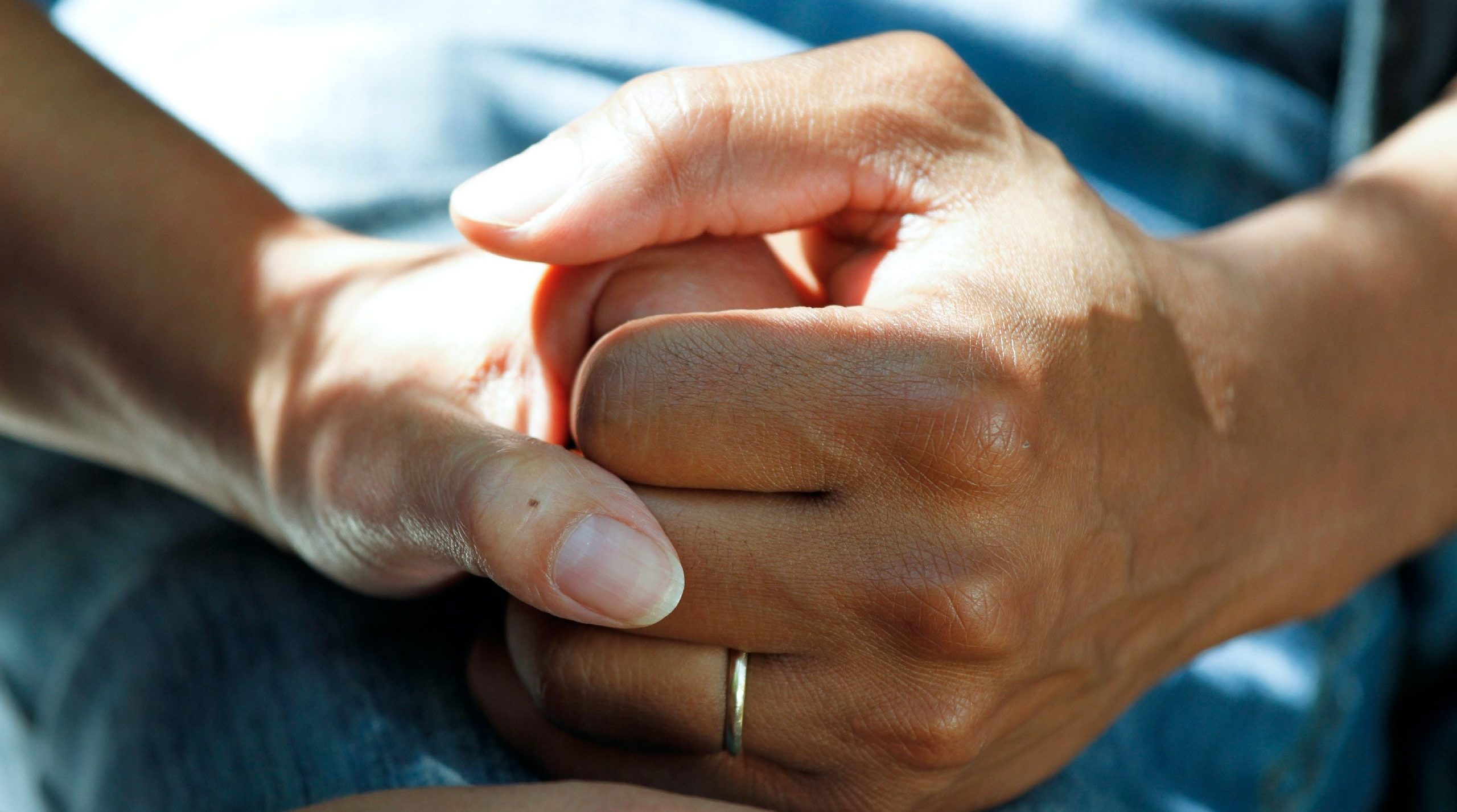
Featured photo by National Cancer Institute on Unsplash





Heart breaking . So well thought out with deep emotion. Even though you grieve differently, you are grieving the same precious daughter. You need to support each other through this, because neither of you should have to carry this heartbreak alone.
Thank you for the amazing way you spoke to grief around your loss. I am deeply touched by your words and courage to share.
Thank you for this article and sorry for both of your loss