
 Andrew Papanikitas is Deputy Editor of the BJGP.
Do you feel like you are treated as a gadget? You Are Not A Gadget is a manifesto against the distortion of human relationships by technology.1 Digital guru and virtual reality pioneer Jaron Lanier argued in 2010 that the internet is deadening personal interaction — we have ever more ways to express ourselves but ever fewer things of consequence to say. The ways in which both digital and human systems adversely affect human relationships and dehumanise us have been a recurring thread in BJGP Life. You may feel ‘as if we’re stuck inside a vast machine, cogs turned by other cogs, with little real agency; it’s just a bit dehumanising … At the same time as we’re trying to make people work like machines, we’re also busy trying to make machines more like people.’ 2 So this is happening. What does this mean? What should we do about it?
“It is amazing how we often fail to recognise the remarkable people around us, even as they inspire us in our future careers.”
Ben Hoban explores our reliance on systems when there is increased demand in primary care — the approach of winter.3 Any system for managing seasonal illness makes assumptions, primarily that we are dealing with a seasonal illness rather than something similar but more serious. For Hoban, the ‘system’ risks overdiagnosis while fostering a toxic sense that clinicians should never be overwhelmed by impossible demand. By contrast Tim Senior invites us to decrypt the anxieties in the consultation.4 Which anxieties belong to the patient and which to the clinician, and of those which is driving investigation and management? If we can understand the anxiety ‘engine’ better, perhaps we address patients’ ideas, concerns, and expectations in preference to our own by recognising both.
I have always thought of the BJGP as an outlet for the shared wisdom of GPs, and this issue we also channel the wisdom of the RCGP annual conference and Research Paper of the Year. Looking Yonder, Alex Burrell discusses how doctors weigh the four principles of bioethics, think about rejected referrals, recognise ruptured abdominal aortic aneurysms in out of hours, and help patients to take up exercise.5 Chew-Graham and Samina Begum, a public contributor from the People and Communities Group at Keele University, discuss the RCGP RPY.6 The insights? Nasal spray plus a behavioural intervention reduced antibiotic use. The practical implications are clear. Recent changes in the way primary care is delivered: digitalisation, physical distancing, extension of roles, and protocolisation may fragment, compromise, and dehumanise care. Perhaps this is depressing and true but can this change practice? Another winning paper suggests an answer: the knowledge needed to deliver high-quality remote encounters to diverse patient groups is complex, collective, and organisationally embedded. This means that the vital role of non-didactic training needs to be recognised and not squashed out by competing priorities.
People Need People is a wonderful poem by Benjamin Zephaniah that illustrates the ways our human relationships depend on others.7 It is amazing how we often fail to recognise the remarkable people around us, even as they inspire us in our future careers. John Launer illustrates this with a slice of memoir, ‘Though I knew so little about them I met them, it now feels an extraordinary privilege to have encountered these remarkable women.’ 8 Graham Easton reviews To Exist As I Am By Grace Spence Green and finds himself struck by her critique of the corrosive stories we tell about illness, disability, and healing, and the unarguable power of empathy in health care ‘And even after 30 years as a GP, I picked up plenty of new do’s and don’ts about what to say and how to be with patients particularly people with disabilities.’
“My least favourite orientation is that curriculum is a technology applied to learners to produce a predefined sort of graduate.”
Richard Lehman reviews Dr. Bot by Charlotte Blease — ‘By weaving patient narratives through the book, Blease sheds light on all the awfulness that we know exists in the advanced health systems of the UK and the US. Our own frequent awfulness as doctors is placed in the context of these systems, but above all the context of our being humans.’ Echoing Hoban, Lehman takes the point that we ought not try and fail to be all doing, all caring, all knowing personal agents. He is persuaded that we can now use generative AI to make medicine more able, amiable, and accessible throughout the world. We still need people though … don’t we?
You may not be a gadget, but is curriculum a technology? Back in the 1980s, Elliot Eisner, an American scholar of education outlined what he saw as the key flavours of a curriculum — a curriculum being broadly that which we ought to teach and learn.11 He suggested that we might see education in one or more of five ways: education might help us to think more clearly (cognitive enhancement); it might represent the knowledge that a particular specialty or discipline is considered worthy (academic rationalism); it might be that which is of meaning and value to the learner (personal relevance); and, depending on your perspective, a curriculum might adapt you for a role in society (social adaptation) and even provide the skills to alter society (social reconstruction). My least favourite orientation is that curriculum is a technology applied to learners to produce a predefined sort of graduate. The idea that links all of these orientations lies in the different meaning of a curriculum to different groups of people. I’d like to think that all the flavours are represented in this journal … and that there is plenty to say!
References
1. Lanier J. You are not a gadget: a manifesto. New York, NY: Alfred A Knopf, 2010.
2. Hoban B. Being human. Br J Gen Pract 2024; DOI: https://doi.org/10.3399/bjgp24X736269.
3. Hoban B. Complexity, demand, and those little white spots. Br J Gen Pract 2025; DOI: https://doi.org/10.3399/bjgp25X743553.
4. Senior T. The anxiety engine. Br J Gen Pract 2025; DOI: https://doi.org/10.3399/bjgp25X743601.
5. Burrell A. Yonder: Principlistic equality, rejected referrals, ruptured AAAs in out of hours, and Kickstart patient movement. Br J Gen Pract 2025; DOI: https://doi.org/10.3399/bjgp25X743589.
6. Chew-Graham C, Begum S. Research Paper of the Year 2024: impact on the patient, the practitioner, the practice, and policy. Br J Gen Pract 2025; DOI: https://doi.org/10.3399/bjgp25X743541.
7. Zephaniah B. Wicked world! London: Puffin, 2000.
8. Launer J. Three remarkable women. Br J Gen Pract 2025; DOI: https://doi.org/10.3399/bjgp25X743529.
9. Easton G. Books: To Exist as I am: a Doctor’s Notes on Recovery and Radical Acceptance. Br J Gen Pract 2025; DOI: https://doi.org/10.3399/bjgp25X743577.
10. Lehman R. Books: Dr. Bot: Why Doctors Can Fail Us — and How AI Could Save Lives. Br J Gen Pract 2025; DOI: https://doi.org/10.3399/bjgp25X743565.
11. Eisner EW. Five basic orientations to the curriculum. In: The educational imagination: on the design and evaluation of the school programs. New York, NY: Macmillan Publishing, 1979; 50–73.
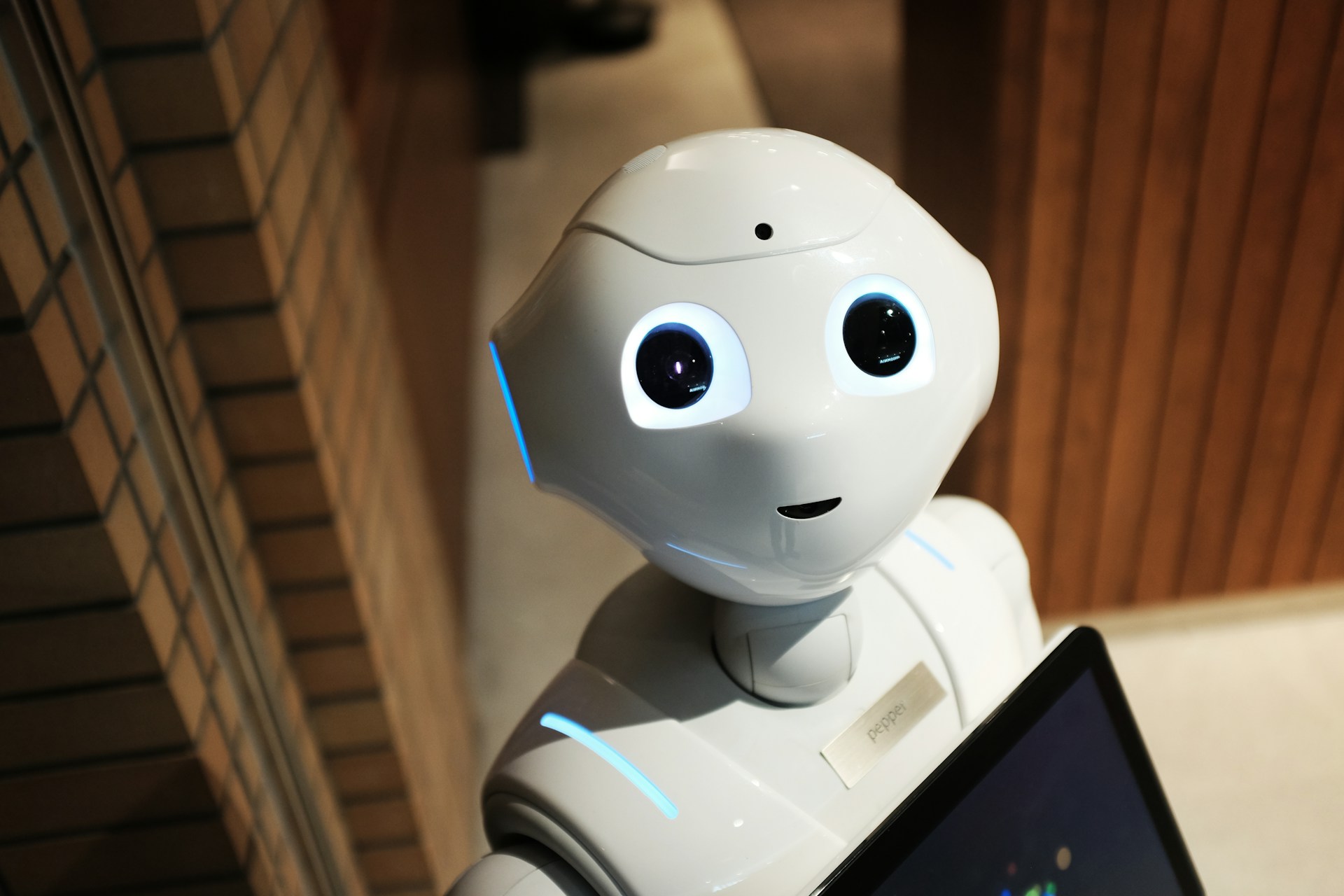
Featured photo by Alex Knight on Unplash.