
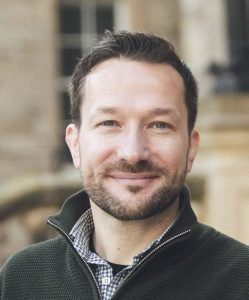
 Simon Smail is a GP, trainer, and occupational health physician in Edinburgh, and medical director of Evergreen Medical & Wellness Clinic
In August 1985, when I was four years old, the Journal of the Royal College of General Practitioners, this journal’s predecessor, published an editorial entitled ‘Medicine and the Media.’¹ Its author was Simon A. Smail, then senior lecturer in general practice at the University of Wales College of Medicine. He is my uncle, and I was named after him.
He described a public fascinated by dramatic cures and medical failures; sensational headlines and contraceptive scares; and a profession urged to use the media while quietly distrusting those who controlled it. The stories themselves remain familiar. What has changed is how they reach the public and who gets to tell them.
In 1985, journalists selected the stories, producers framed them, and editors wrote the headlines. Doctors provided the medical information, but others decided how it reached the public.
In 1985, journalists selected the stories, producers framed them, and editors wrote the headlines. Doctors provided the medical information, but others decided how it reached the public. When a medical story was distorted or sensationalised, the profession could at least place the blame on someone else. That distance has disappeared. A doctor can now film, edit and distribute a health message to a vast audience without a journalist, producer or editor in between. We did not simply learn to work with the media. We have, to some extent, become part of the media.
Doctors are communicating in an online environment already crowded with competing claims. During disease outbreaks, the World Health Organization describes this overabundance of information, including false or misleading claims, as an ‘infodemic.’² In a large study of general news shared on Twitter, false stories spread further, faster and more widely than true ones, perhaps partly because they appeared more novel and surprising.³ We are competing in an environment where the most accurate message does not automatically become the most successful one.
Medical evidence is also at a disadvantage because it moves differently. An influencer can package a compelling health claim into 30 seconds and send it around the world while researchers are still framing the question. Medicine proceeds through trials, comparison, replication and peer review. By the time we have weighed the evidence and considered its limitations, the original claim may already have reached millions.
We cannot make science move at the speed of the algorithm, nor should we. But we must become better at communicating what we know, and what we do not, before an unsupported claim becomes an established belief. It is tempting to assume that better facts will solve the problem. Accurate information matters and can correct mistaken beliefs, but changing what people do is harder. That lesson is older and appears in my uncle’s 1985 reference list.
The Stanford Three Community Study, published in 1977, showed that a mass-media campaign improved cardiovascular knowledge and behaviour, but combining media with intensive personal instruction produced greater changes among those at high risk.⁴ The lesson was not that media communication failed, but that personal contact could increase its impact.
Public communication should therefore be treated as a professional competence: taught, supervised and judged by a better metric than the number of people it reaches.
That is the difficulty with the medium we have adopted. Social media makes mass communication feel personal without making it personalised. A doctor speaking into a camera can appear familiar and trusted while knowing nothing about the viewer, their history or the circumstances in which that advice will be applied. We have acquired the reach my uncle’s generation lacked, but risk mistaking reach for relationship.
None of this argues for withdrawal. If credible clinicians step back because the medium feels superficial, the space will not remain empty. Good medical practice already requires doctors communicating publicly to check accuracy, declare competing interests and not present opinion as established fact.5 Yet few of us have been trained to meet that standard in 30 seconds of video. Public communication should therefore be treated as a professional competence: taught, supervised and judged by a better metric than the number of people it reaches.
Doctors should not try to out-sensationalise the sensationalists. But accuracy without clarity will struggle to compete, and evidence communicated too late may be scarcely better than evidence not communicated at all. Protecting public health now requires us not only to understand the evidence, but to explain uncertainty without sounding evasive and to make reliable information at least as accessible as the claims it must challenge.
In his 1985 editorial, my uncle ended by arguing that, “…some doctors must develop the skills necessary to communicate on a wider basis with the public through the media.” Four decades later, the need he identified has only become more urgent.
References
1. Smail SA. Medicine and the media. J R Coll Gen Pract 1985; 35(277): 363–364. Available from: https://pmc.ncbi.nlm.nih.gov/articles/PMC1960224/pdf/jroyalcgprac00164-0004.pdf (accessed 14 August 2026).
2. World Health Organization. Infodemic. Geneva: WHO. Available from: https://www.who.int/health-topics/infodemic (accessed 14 August 2026).
3. Vosoughi S, Roy D, Aral S. The spread of true and false news online. Science 2018; 359(6380): 1146–1151.
4. Maccoby N, Farquhar JW, Wood PD, Alexander J. Reducing the risk of cardiovascular disease: effects of a community-based campaign on knowledge and behaviour. J Community Health 1977; 3(2): 100–114.
5. General Medical Council. Good medical practice. Manchester: GMC; 2024. Paragraphs 88-90. Available from: https://www.gmc-uk.org/professional-standards/the-professional-standards/good-medical-practice/domain-4-trust-and-professionalism (accessed 14 August 2026).
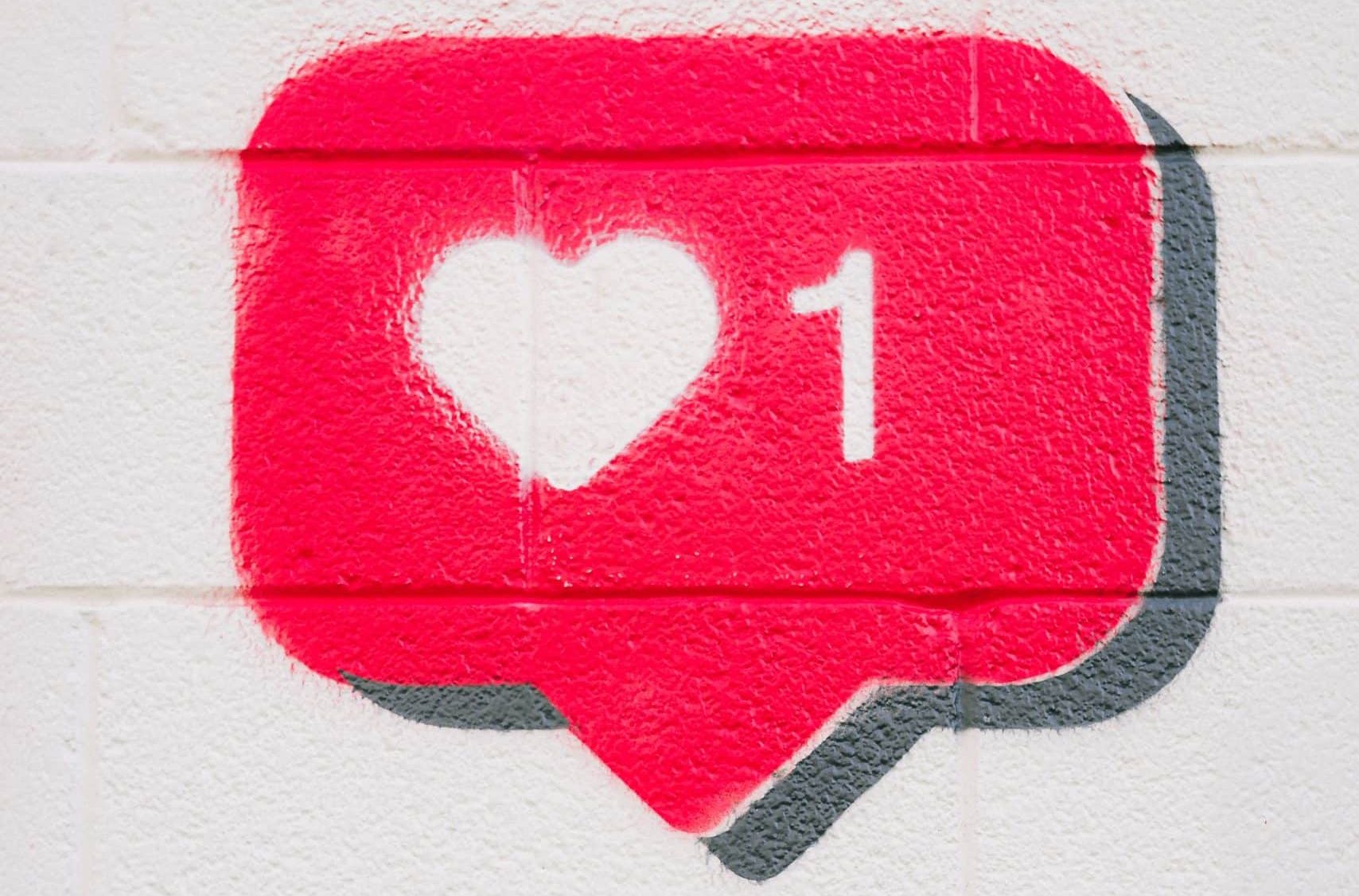
Featured image by Karsten Winegeart on Unsplash