

Rachna Chowla is a poet, publisher (Swirling Leaf Press), GP, and Joint Director of Clinical Strategy at King’s Health Partners, London.
‘It all starts with the embrace, that is the most important part, and then we just walk together, slowly’, my friend Jose said to me last night at a milonga in Madrid. He and his wife have been travelling 30 km from the north of Madrid to dance on Fridays and Saturdays for over two decades. I looked across at a room filled with moments of beautiful intimacy, eyes that met, flowery-feline footwork from the follower (usually the woman) and footwork of surety from the lead (usually the man), a dance with passionate crescendos and the most gentle of releases, and not a screen in sight.
I started ballroom and Latin dancing 20 years ago but stopped during the COVID-19 pandemic, and while I had danced some tango, yesterday I was reminded that my feet knew more than I did, when I allowed myself to be led by the milongueros. In tango, a lead asks a follower to dance and they dance for three songs — that’s some commitment when I am basically a beginner!
“Back then, I just remember his eyes asking me, and even then my feet knew the answer!”
But this is what I experienced — time after time, with Spanish gentleman after gentleman, we would meet, slowly merge into an embrace, sway a little, again slowly, so that some kind of synchronicity would happen and we understood ‘our rhythm’, and only then would we ‘begin’. Sometimes my feet just knew what to do, and sometimes not. I had impeccable, kind, patient leads, who took my hand and led me without judgement, and that’s what struck me — when I would say that I was a beginner, the answer back was always ‘let’s just dance’, and a complete openness to the music was revealed in our steps. My missteps would be accompanied by an apology from me, to which the reply was always a steadying with an arm to reassure me and a ‘tranquila’.
In medicine it should also start with ‘the embrace’, or the true meeting between two people — one in the role of the physician, and the other in the role of a patient, but both there to somehow dance. In medicine, we actually take turns in leading, it’s not always the care-giver, but I come back to Jose’s first point, ‘It all starts with the embrace’. And that is the problem, because in our efficiency-driven ‘digital-first’ world, where what for millenia our physiology and nervous systems have evolved to do — make eye-contact, connect through warm smiles, unconscious emotional co-regulation, touch, and more — has been lost and instead replaced with an exchange of information. That’s not how best to understand one another; that’s not how we continue to build trust. There is no place for understanding the rhythm of a moment with another human being — that’s not the art of the dance, and both patient and care-giver are somehow poorer for it.
“We don’t see the widow with two wedding bands, he is cruelly reduced to some words on a screen.”
As a GP registrar, I once cared for a couple who like me loved ballroom dance, where the wife became ill very quickly and sadly died. Her husband came to see me a few weeks after her passing and he wore two wedding bands on his hand, his and hers. We talked, and then at the end he asked me for one small dance. So there, in the tiny consulting room in South East London, we took a few steps in a loose embrace — for him it was a hug and a holding from someone who had accompanied him during this difficult time. I never saw him after that. Back then, I just remember his eyes asking me, and even then my feet knew the answer! For me, the significance and profoundness of that little dance has grown over time and I am grateful that my chapter with him and his wife closed in such a tender and human way.
If we don’t see each other, we cannot deeply see one another — and we cannot see that we are beings trying to find meaning and understanding in what’s happening. We don’t see the widow with two wedding bands, he is cruelly reduced to some words on a screen. By reducing life to screens and the exchange of data we do not see the humanity in the other, and in so doing nor our own humanity.
We must re-discover the art of medicine, the art of the dance in medicine, the art of really meeting one another in the embrace of a shared understanding, of our shared humanity, of our shared being — this, like Jose said, is the most important part.
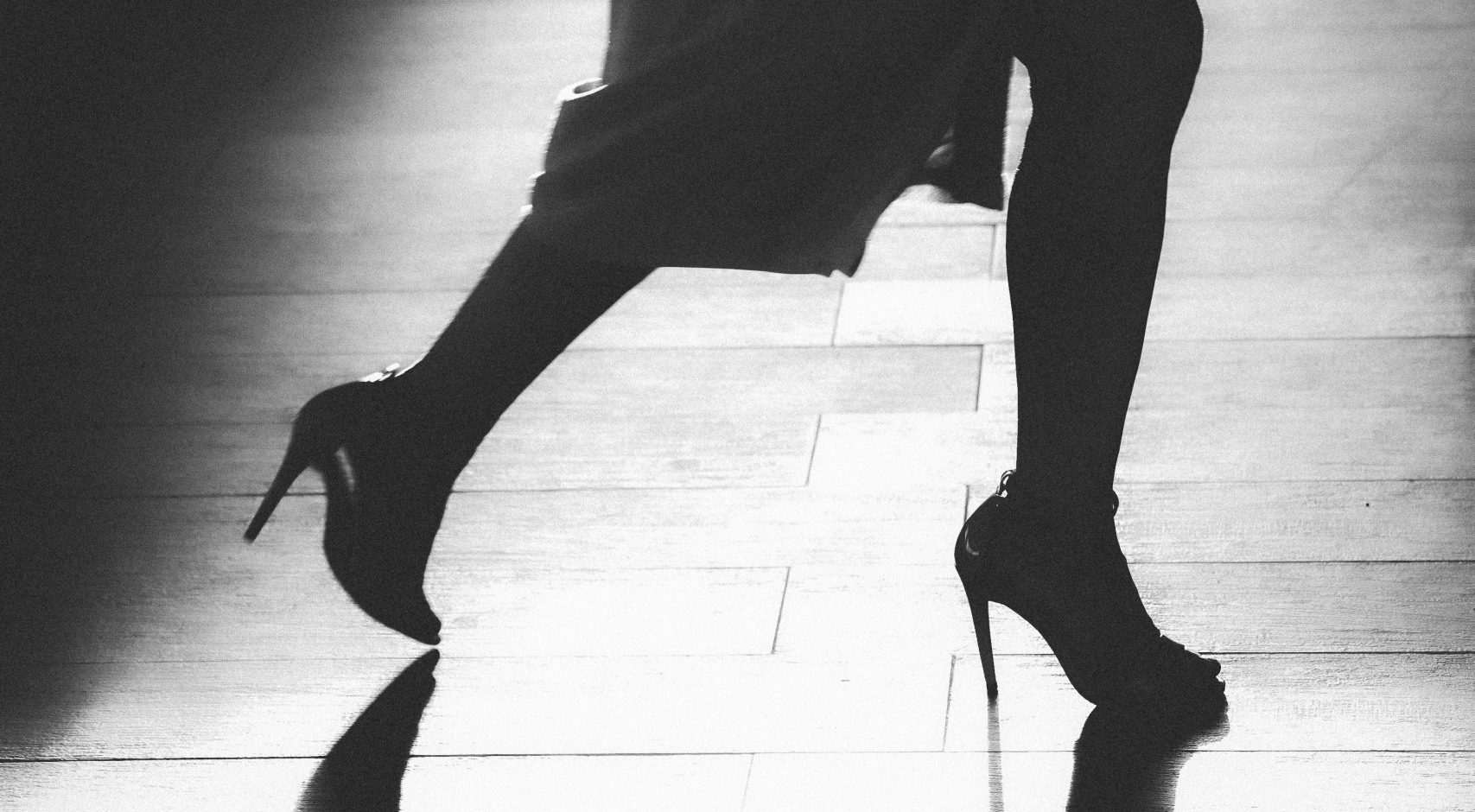
Featured photo by Rafael Leão on Unsplash.


What an incredibly inspiring and lovely reflection – thank you so much for sharing.
What a beautiful post and reflection. I am a huge fan of partner dancing and have tried many different styles over the years. Argentine Tango for me is the ultimate because of the communication involved. I would love to do more and be better at it. Taking up ballroom dancing is a great thing to encourage one’s patients (especially older one’s) to do as it has so many benefits – improving strength, flexibility, memory but above all building connection between people!
A wonderfully thought-provoking read. In an increasingly digital and efficiency-driven NHS, it’s a powerful reminder that medicine begins with genuine human connection. The “embrace” is just as important as the diagnosis
Thank you for writing and sharing this Rachna. A powerful reminder of what is important for us all – for interactions between staff/teams as well as our duty to our patients