


 Daisuke Son is a family physician and medical educator in Japan. His academic interests include community-based family medicine, health humanities, phenomenology, dialogue, and patient narratives. He is on LinkedIn
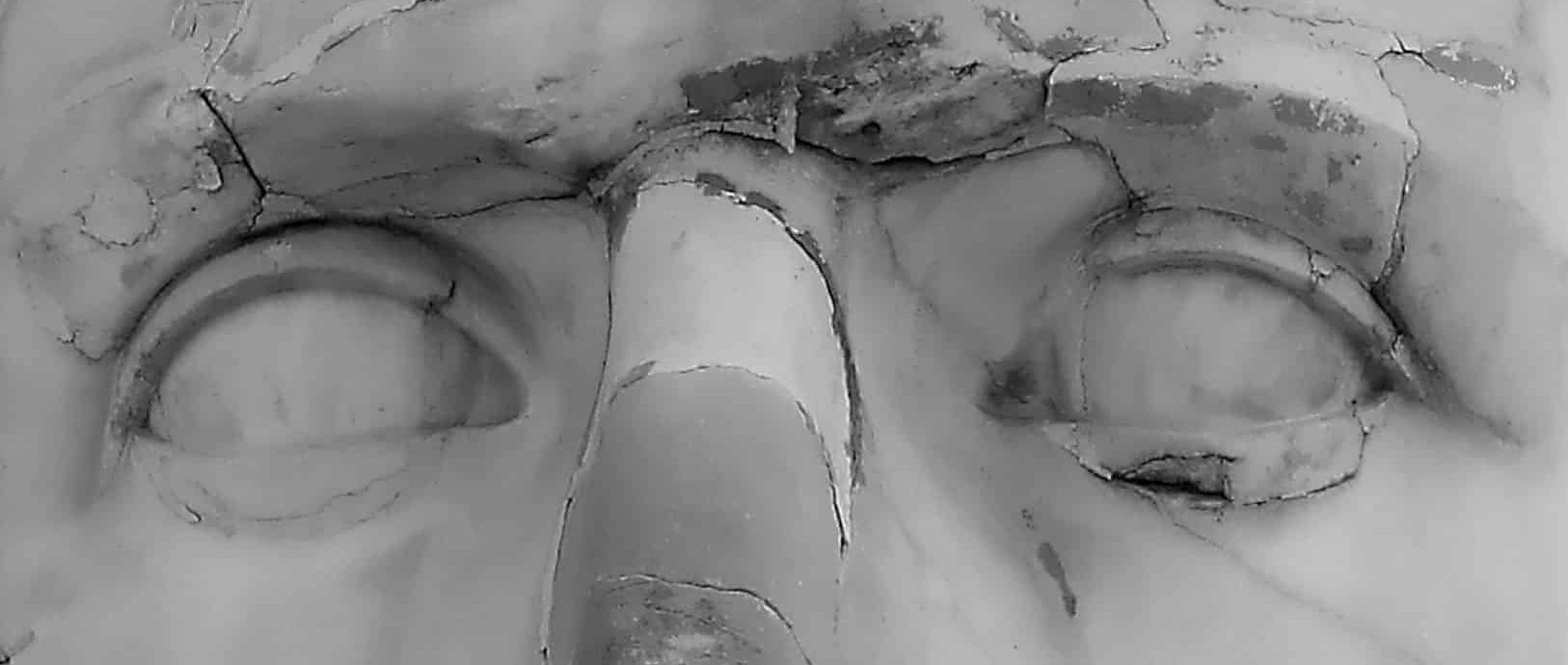
General practice often begins before diagnosis. A patient enters the consulting room, sits down, and looks at us. Before a history is taken, before symptoms are translated into clinical terms, before risk scores and guidelines begin their work, there is a face.
Before a history is taken, before symptoms are translated into clinical terms, before risk scores and guidelines begin their work, there is a face.
Emmanuel Levinas used the word “face” not simply to mean the visible features of another person. The face is the presence of the other who addresses me before I have fully understood them. It is a call. It says, silently and insistently: do not reduce me to an object, a category, or a case. In this sense, ethics begins not with a rule, but with an encounter.1,2
The meaning of 0.2 kg
I first understood something like this not through philosophy, but through patients on haemodialysis. Earlier in my career, I worked as a nephrologist. On occasion, after dialysis, a patient might wish to discuss the fact that treatment had ended with 0.2 kg more fluid remaining than planned.
“Doctor,” I would be asked, in effect, “do you understand what that 0.2 kg means?”
To me, at that moment, 0.2 kg was a number: clinically small, technically manageable. To a patient, it meant something entirely different. It meant thirst. It meant the beer he could not drink on a hot summer evening. It meant the narrowing of an already narrow margin of freedom. What appeared in my medical field as 200 ml of water appeared in a patient’s life as deprivation, frustration, and loss.
I do not remember exactly what I said. I remember patients’ faces. I remember their seriousness, and the way anger would soften as I listened. I had no brilliant intervention. I did not change dialysis prescriptions in any dramatic way. Yet something happened in those conversations. I was addressed by personal suffering, and I tried, however inadequately, to respond.
Such listening is close to what Arthur Kleinman described as attending to the patient’s illness narrative: the lived story through which suffering becomes meaningful.3 The patient does not merely report a physiological problem but discloses a world in which 0.2 kg had moral, emotional, and existential weight.
Responsibility before certainty
Levinas helps us name what is ethically at stake in such encounters. The patient’s face interrupts the totalising tendency of medicine: the tendency to grasp, classify, explain, and manage.2 Of course, medicine must do these things. Family physicians need biomedical knowledge, diagnostic reasoning, and evidence-based practice. The face does not abolish science. It prevents science from becoming the whole of care.
The face says: this person exceeds my formulation. The symptom list is not the suffering. The diagnosis is not the person. The guideline is not the relationship. The electronic record is not the life.
To respond to the face is therefore not merely to be kind. It is to accept responsibility before full certainty is available.1 In general practice, this is especially important because we often work in uncertainty: early symptoms, ambiguous complaints, chronic distress, family conflict, social isolation, and illness that does not yet have a name. The temptation is to close uncertainty too quickly. Levinas invites us to stay open a little longer.
The patient’s face interrupts the totalising tendency of medicine: the tendency to grasp, classify, explain, and manage.
This is also why continuity of care matters. In hospital medicine, the patient may appear briefly as an episode. In family medicine, the face returns. We meet the same person across years: in illness and recovery, in family crisis, in home visits, in bereavement, and sometimes in silence. Over time, we learn that responding is not a single communicative technique. It is a way of being available to another person’s vulnerability.
Perhaps this is why listening can be therapeutic even when it seems that “nothing” has been done. The patient whose suffering has been heard is no longer alone with an unnamed experience. The clinician, too, is changed. The face of one patient continues to call us when we meet another.
For me, being a family physician means living with this call. Before I diagnose, I am addressed. Before I explain, I am responsible. Before the patient becomes a case, there is a face.
References
1. Levinas E. Ethics and infinity: conversations with Philippe Nemo. Pittsburgh, PA: Duquesne University Press; 1985.
2. Levinas E. Totality and infinity: an essay on exteriority. Pittsburgh, PA: Duquesne University Press; 1969.
3. Kleinman A. The illness narratives: suffering, healing, and the human condition. New York: Basic Books; 1988.
Featured Photo by Anne Nygård on Unsplash