


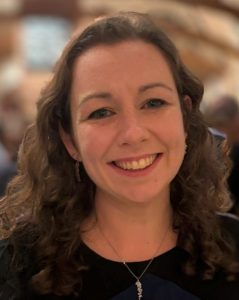
 Kerry Greenan is a GP Partner at Bromley-by-Bow Health Partnership, Tower Hamlets ICB Clinical Lead for Population Health and Neighbourhoods including Homelessness, and the Secretary for the European Young Family Doctors’ Movement.
In Askøy, north of Bergen, Norway, surrounded by postcard-pretty views from the clinic windows, patients were waiting patiently for their GP to return from an emergency call-out to collapsed patient in a cabin in the woods. Over an hour late for appointments, there was no grumbling, just gratitude to be seen on her return.
I was in Askøy on a Hippokrates exchange, a week-long observational placement organised by the European Young Family Doctors’ Movement. With my time as a young doctor running out, I wanted to experience primary care in a different setting. Norway, with its reputation for world-class healthcare and emphasis on continuity, felt the obvious choice. (A love of Scandi-noir and a desire to see the fjords may also have played their part.)
I had a sense of patients being given more time during consultations and never feeling rushed even if the clinic was running late.
Day-to-day clinics consisted of similar presentations to those we would see back in the UK, with patients of all ages and complaints ranging from acute infections, long term conditions and mental health conditions. The volume of patients per day, however, is lower than in the UK, with typically around 14-18 patients throughout the day in 15-20 minute appointments – I had a sense of patients being given more time during consultations and never feeling rushed even if the clinic was running late. There was more emergency care, since patients cannot attend A&E unless they have been referred by a GP, and the urgent care doesn’t open until 4pm when the GP surgeries close. If an ambulance is called, a GP will meet them with the patient and make the call about whether admission is needed – a level of continuity built into every healthcare contact.
One of the main reasons this works is the way the health system is set up: most GPs are self-employed and responsible for their own patient list. They can choose the size of their list (around 1100 patients is average), meaning that they can ensure they only take on as many patients as they can manage. Income is based partly on list size, but mostly on activity, so there is little incentive to take on more patients that is manageable. This list-based system embeds continuity into primary care: doctors are responsible for every aspect of their patient’s care, often for years. Occasionally colleagues cover each other’s patients for urgent problems, but this is the exception rather than the rule. Obviously there are benefits here in terms of familiarity with cases meaning safer and often quicker decision-making, but what I had underestimated was the impact that this continuity has on trust and the doctor-patient relationship. Patients know their doctor well, benefit from consistency of approach and are understanding if they have to wait slightly longer for appointments during busy periods, knowing from years of experience that their GP is there for them. This feels like a more traditional primary care model, one which is becoming rarer in the UK, particularly in inner city practices.
Of course, no system is perfect and I heard familiar frustrations about long waiting times for secondary care appointments and GPs being asked to issue sick notes for hospital-managed problems. There are also concerns around recruitment and retention of GPs which threaten the sustainability of the model, particularly in Norway’s rural areas.
What is very different from the UK, and what makes the Norwegian system possible is how it is funded. There is universal health coverage through a national insurance scheme (Folketrygd) funded primarily through taxes, but patients also make co-payments for services (up to an annual cap). I am so familiar with the ‘free at the point of access’ model, that the idea of generating bills to patients as they left felt really strange to me. I found myself repeatedly asking ‘how much did that cost?’ at the end of every consultation for the first couple of days. I was surprised not to see any evidence of patients complaining or worrying about the costs of services during my time in the practice, but given the health system has been functioning in this way for many years and the fees are fixed by the government and not individual GPs this seems to be accepted. I can’t imagine this system of co-payments working in the UK (and nor would I invite it), but what is clear is the quality of service possible in a well-funded system.
What is very different from the UK, and what makes the Norwegian system possible is how it is funded.
One of my interests is in health inequalities: I didn’t see much evidence of any projects tackling this, but reflecting on the average wealth of the population and the robust social welfare available, it is possible that they are somewhat protected from these inequities.
The other surprise was that there are no incentivised targets (such as our QOF programme). I debated this internally: with smaller list sizes, long-term conditions can be managed in more of a personalised holistic approach which is a clear strength. However there is less of a focus on screening and prevention, which could be a limitation, and I wondered about quality assurance.
I learnt a great deal from my week in Norway: it was wonderful to experience a different healthcare system, and I left feeling a bit envious! Although my non-existent Norwegian means I won’t be making the jump across the North Sea anytime soon, I am reflecting on how we could push for increasing continuity and trust with our own patients here.
Featured Photo by Sébastien Goldberg on Unsplash